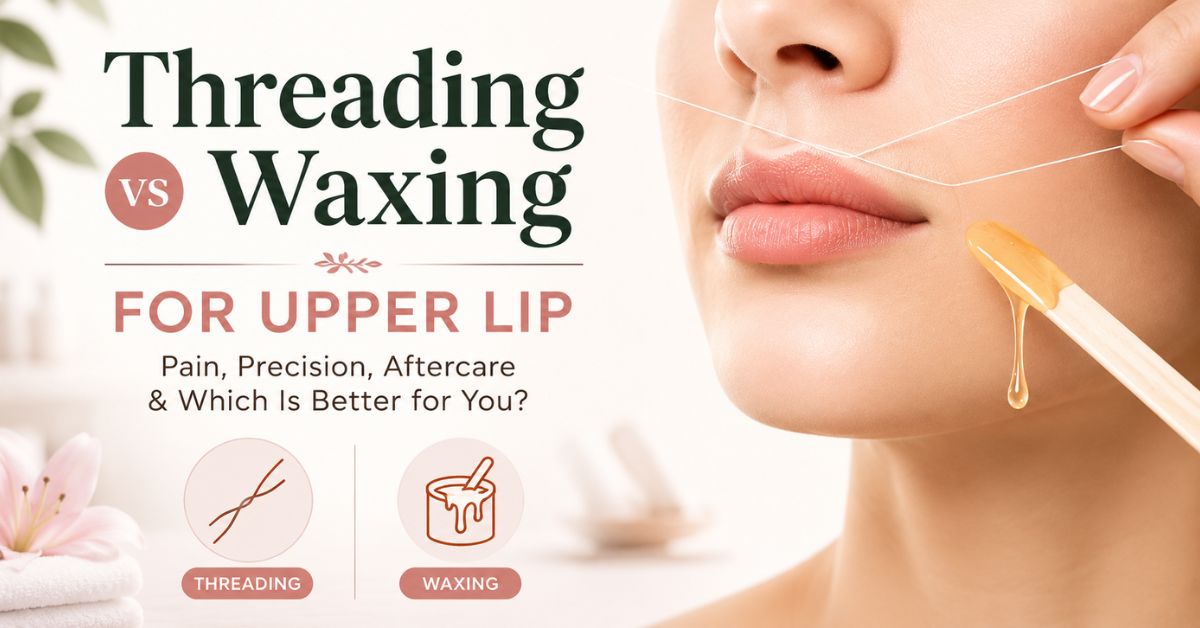
Threading vs Waxing for the Upper Lip: Which Is Better
For most skin types, threading is gentler and more precise for the upper lip, while waxing clears hair faster but carries a slightly higher risk of irritation. Neither method is universally "better," since the right choice depends on skin sensitivity, hair thickness, and how much precision someone wants around the lip line. This guide compares both methods so it's easier to decide which one fits.
How Does Upper Lip Threading Work?
Threading uses a twisted cotton thread to trap and lift individual hairs directly from the follicle. Because it works hair by hair, technicians can shape a very precise line, which matters most for anyone shaping around the natural curve of the lip. No wax or chemicals touch the skin, which is part of why threading tends to suit sensitive skin well.
How Does Upper Lip Waxing Work?
Waxing applies warm wax across the entire treatment area, then removes it in one motion, pulling out multiple hairs at once. It's faster than threading for covering a larger area, but the wax does make direct contact with the skin, which increases the chance of redness on reactive or thin skin.
Threading vs Waxing: Pain, Precision, and Longevity Compared
Pain level: Threading tends to feel like quick pinches; waxing feels like one longer pull
Precision: Threading allows hair-by-hair shaping; waxing removes hair in broader strokes
Speed: Waxing is typically faster for larger areas; threading takes more time for detail
Regrowth: Both methods pull hair from the root, so regrowth timing is similar, generally two to four weeks
Skin contact: Threading avoids direct skin contact; waxing involves warm wax against skin
Which Is Better for Sensitive Skin?
Threading is generally the safer choice for sensitive skin, since nothing but thread touches the skin's surface. Waxing can trigger redness, bumps, or minor swelling on reactive skin, especially if the wax temperature isn't well controlled. Clients using retinoids or other active skincare ingredients are also often steered toward threading, since waxing can pull off more than just hair on skin that's already thinner from actives.
How Long Do Results Last?
Both threading and waxing remove hair from the root, so results typically last two to four weeks before regrowth becomes noticeable. Threading can sometimes train fine hair to grow back finer over repeated sessions, though results vary by individual.
Aftercare Tips for Upper Lip Hair Removal
Avoid direct sun exposure on the treated area for 24 hours
Skip harsh exfoliants or retinoids for a day or two after treatment
Apply a gentle, fragrance-free moisturizer if skin feels tight
Avoid touching or picking at the area while it settles
Final Verdict: Threading or Waxing for Your Upper Lip?
For most people asking whether threading or waxing is better for the upper lip, threading wins on precision and sensitivity, while waxing wins on speed. Anyone with reactive skin, active breakouts, or a preference for maximum shape control tends to do better with threading. Clients without sensitivity concerns who want a quick, broader result often prefer waxing instead. SK Herbals offers both services in Old Bridge, NJ, so the choice can be based on skin type rather than availability.
Frequently Asked Questions
Which lasts longer, threading or waxing?
Both remove hair from the root, so results last about the same length of time, typically two to four weeks. Neither method offers meaningfully longer-lasting results than the other.
Is threading less painful than waxing for the upper lip?
Most people describe threading as a series of quick pinches versus one longer pull with waxing. Pain tolerance varies, but threading is generally considered gentler on sensitive skin.
How often should someone get their upper lip threaded or waxed?
Every three to four weeks is typical, timed around natural regrowth. Going too frequently can irritate the skin without much added benefit.
Can threading or waxing cause upper lip skin damage?
Both are safe when done correctly by a trained technician. Waxing carries a slightly higher risk of irritation on very sensitive or thin skin, which is why patch testing helps first-time clients.
Is waxing or threading better for people using retinoids?
Threading is usually recommended for clients using retinoids or other strong actives, since waxing can be more likely to irritate skin that's already thinner from those ingredients.